



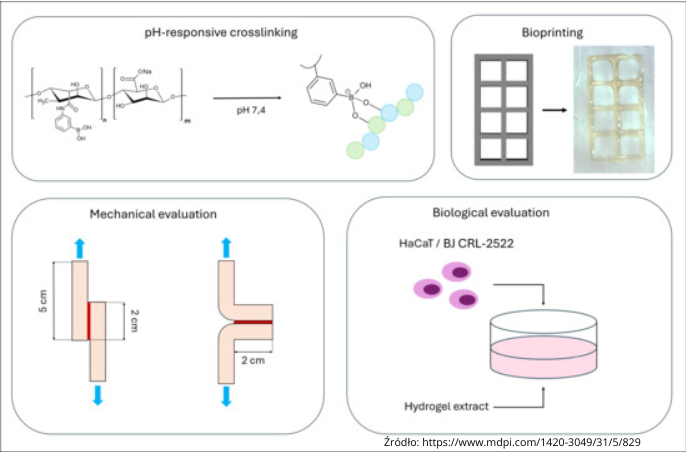
We are pleased to share that the BioCloner Desktop Pro bioprinter was used in the latest research project focused on developing a new generation of hydrogel-based tissue adhesives, which in the future may replace conventional surgical sutures.
The study presented the Alg-APBA material – a hydrogel combining alginate with aminophenylboronic acid. It is a biocompatible alternative to cyanoacrylate-based adhesives, whose use is limited due to the release of toxic substances. Alg-APBA is capable of forming durable bonds under physiological conditions in response to environmental pH. This eliminates the need for additional crosslinking agents.
A key aspect of the work was the ability to precisely bioprint adhesive layers, enabling control over their thickness and uniformity—critical parameters determining bonding strength, which is essential for medical applications.
This is where the BioCloner Desktop Pro was utilized:
- stable and repeatable printing of hydrogel structures
- high accuracy of model shape reproduction (Pr ≈ 0.99)
- controlled process parameters (including extrusion speed and layer height)
The developed material demonstrated:
- high adhesive strength exceeding fibrin-based adhesives
- stability in acidic environments
- good biocompatibility (keratinocytes, fibroblasts)
The study confirms that combining advanced hydrogel materials with bioprinting technology opens new possibilities for implant fixation and soft tissue treatment.
Read here.