


Partnership and research
Partnership with universities as an integral part of research and development activities
We design our 3D bioprinters specifically for experts in medicine and science
The machines are delivered to universities and other research institutions to support scientists in their daily research. This enables them to continue their work across various scientific fields, such as medicine, pharmacy, microbiology and more.
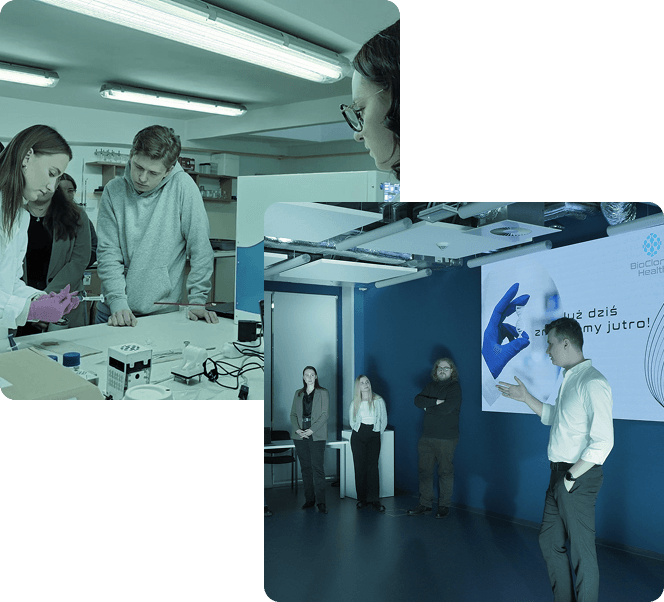
Examples of partnerships
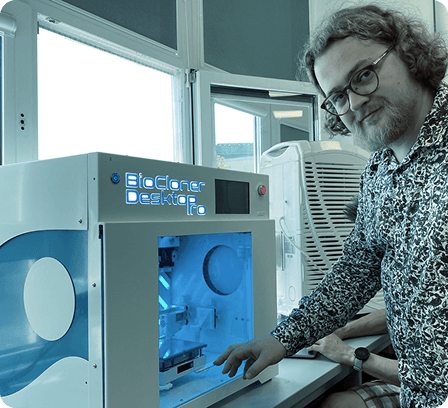

Warsaw University of Technology
The implementation at the Warsaw University of Technology (Faculty of Chemical and Process Engineering) took place in June 2024 and marked the first installation of the BioCloner Desktop Pro 3D bioprinter at a university. Since then, under the supervision of Dr Beata Butruk-Raszeja, students have been using the device to test their solutions and conduct research for their theses.
Intensive work is being carried out under the guidance of Jakub Knap-Wardzyński, who oversees the research processes. The tests cover areas of 3D bioprinting using bacterial cellulose. With its help, students are working on creating a special bioink, a biomaterial containing living cells, and are also studying the conditions that facilitate its printing. This bioink may, in the future, be used for creating realistic models of tissues or organs.
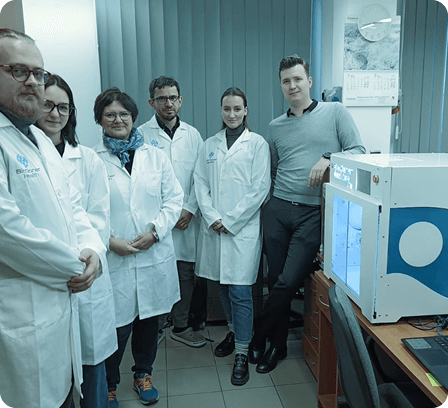

Medical University of Warsaw
The second implementation of the BioCloner Desktop Pro took place at the Medical University of Warsaw. BioCloner Health experts conducted training sessions on operating the 3D bioprinter, preparing the research team to work with the new technology. The participants acquired key skills, enabling them to efficiently begin testing.
This implementation represents a significant step forward in the development of pharmacy, paving the way for drug bioprinting. The aim of the research is to develop a method that enables personalized therapy, enhancing treatment effectiveness and tailoring medications to individual patient needs. Partnership with the Faculty of Pharmacy supports the advancement of innovative therapeutic methods. One research direction focuses on developing a dressing by printing a hydrogel layer onto a proprietary substrate. This solution could contribute to the creation of modern medical materials that support the wound healing process.
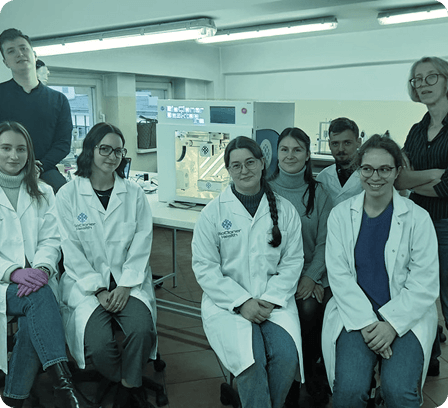

AGH University of Cracow
The implementation of the BioCloner Desktop Pro at AGH University of Cracow, like at other universities, began with workshops conducted by the BioCloner Health team. This time, the workshops lasted two days, allowing our experts to thoroughly explain the device's operation and comprehensively prepare participants for work. The training was attended by both academic staff and master's and doctoral students.
During the meeting, the team presented numerous innovative ideas, creating a great opportunity to exchange experiences in the development of medical technologies. It was at this point that they conceived the idea of printing a cornea. The team from Kraków showed great interest in the possibilities of 3D bioprinting and the capabilities of our device. In addition to cornea bioprinting, BioCloner technology also supports research on dressings, scaffolds, and other tissue engineering applications.

Cracow University of Technology
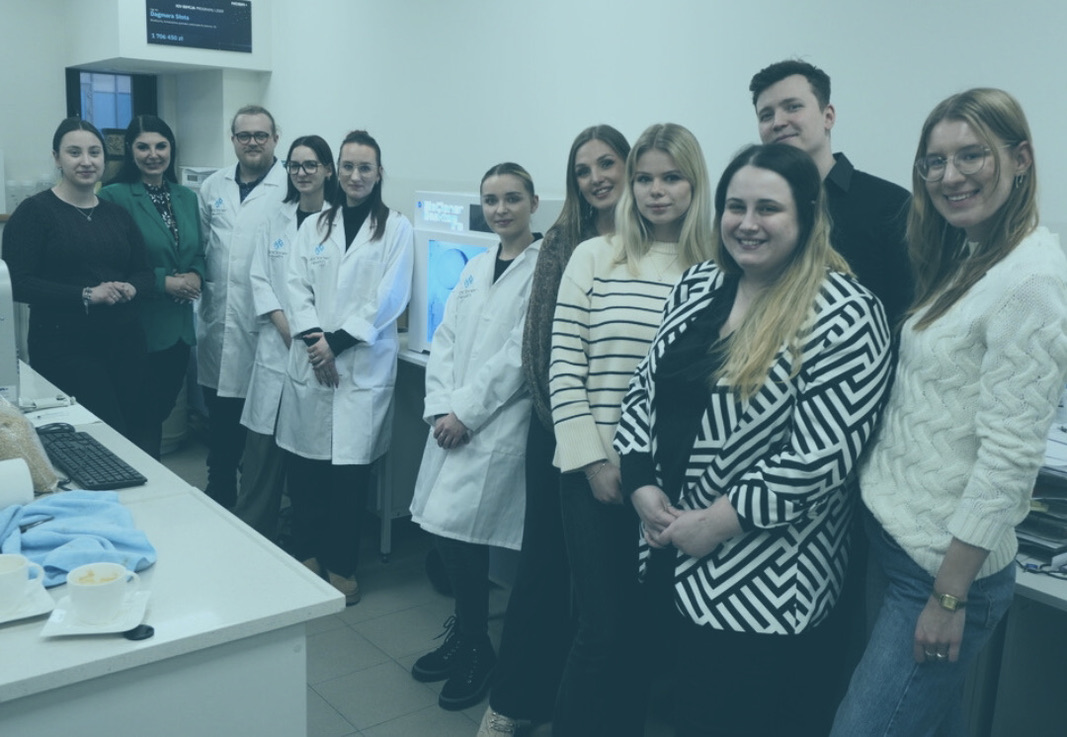
On February 19, the BioCloner Health team installed the fourth BioCloner Desktop Pro machine at the Faculty of Materials Engineering and Physics of the Tadeusz Kościuszko Cracow University of Technology. The device is currently being used by the local team under the supervision of Prof. Agnieszka Sobczak-Kupiec, PhD, Eng.
The implementation process began with a thorough training session, during which BioCloner Health specialists provided a detailed overview of the device's structure and its operation. The next stage involved demonstrating the functionality of the print heads and the software. The workshop concluded with a discussion of the materials used in the bioprinting process and a live printing demonstration.
The BioCloner Desktop Pro is now available to students and researchers at the Cracow University of Technology. It will be used in the implementation of research projects, scientific work, and thesis projects. The BioCloner Health team maintains regular contact with the university, offering technical and expert support at every stage of working with the device. As a result, users can rely on assistance in problem-solving and optimizing research processes.
The collaboration with the Cracow University of Technology aligns with BioCloner Health's mission, which is to support the scientific community in the implementation of innovative research projects. Our company is committed to the development of modern technologies through cooperation with universities, enabling researchers to test and implement their solutions. The feedback and needs provided by them serve as a valuable source of information, helping us to further improve our technologies.

State University of Applied Sciences in Chełm
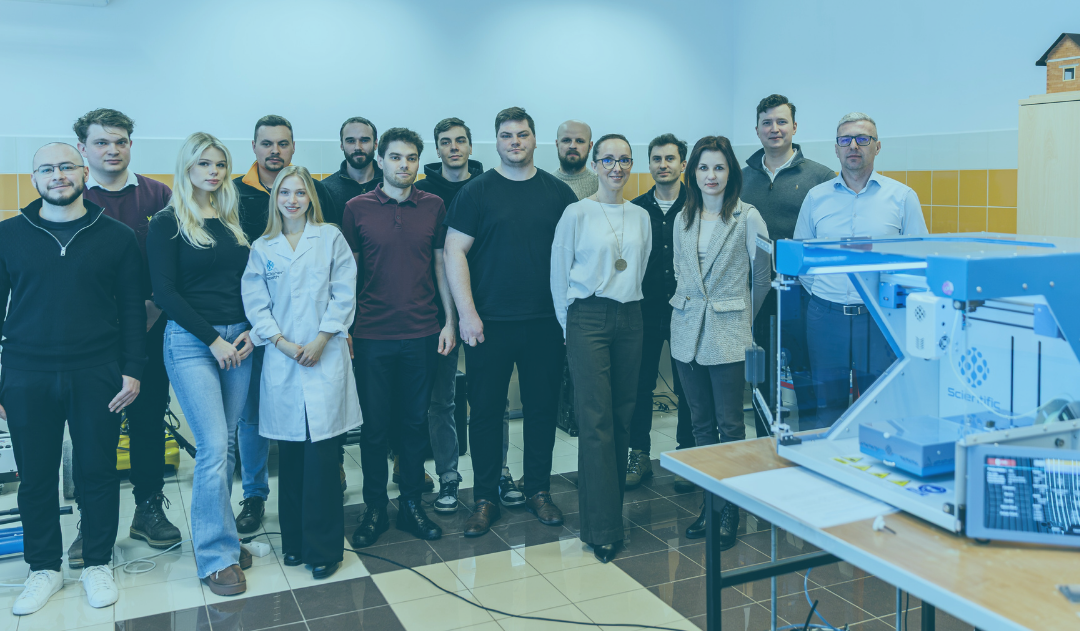
A Scientific multi-head 3D printer by BioCloner Health has been implemented at the State University of Applied Sciences in Chełm. The device was presented during a meeting between company representatives, including Maciej Gołaszewski, and Rector Prof. Beata Fałda, along with the team of the Laboratories of the Engineering Studies Center. During the visit, the capabilities of the system were demonstrated and its potential applications in teaching and research projects conducted at the university were discussed.
The Scientific 3D printer was designed for research and experimental work. Thanks to its modular design and interchangeable print heads, the system supports FFF and DIW technologies, enabling work with a wide range of materials such as filaments and granulates, powders and pastes, as well as gels, photopolymer resins, and high-temperature materials. This broad range of capabilities allows researchers to conduct diverse material experiments and develop new additive manufacturing methods.
Thanks to this implementation, engineering students can carry out projects covering the entire development process – from concept and modeling, through prototyping, to functional and strength testing. Access to advanced research infrastructure supports the development of practical skills, experimental work, and an innovative approach to solving technological challenges.

Adam Mickiewicz University in Poznań
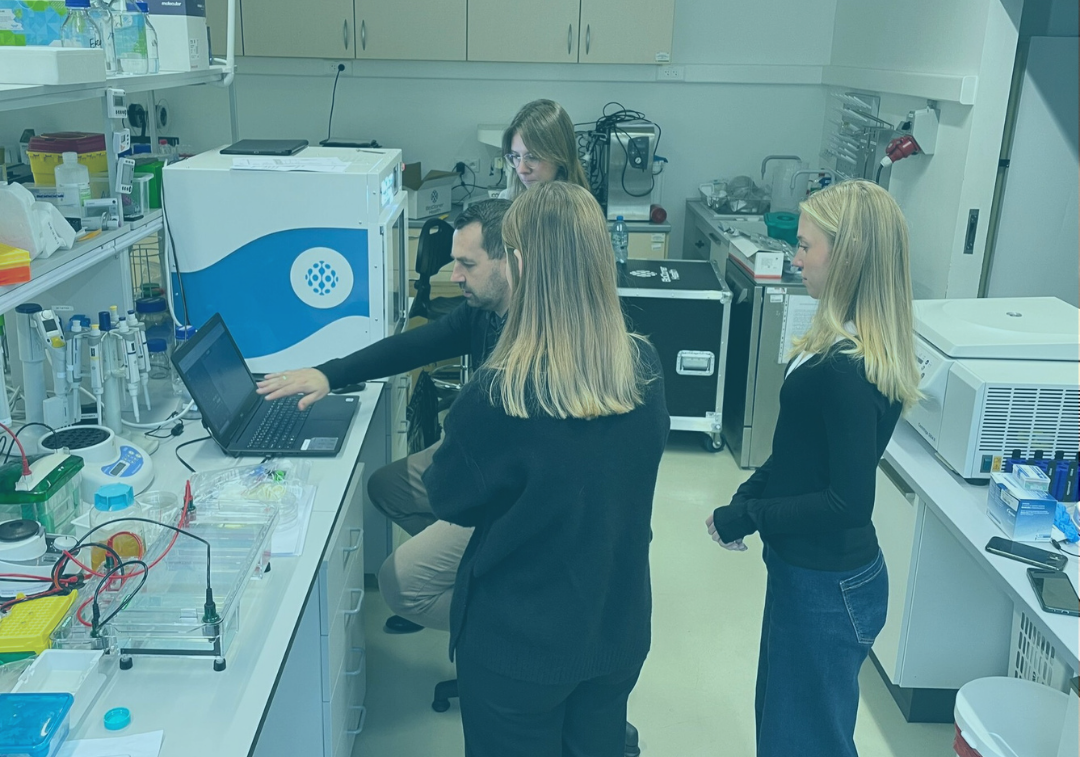
The BioCloner Desktop Pro 3D bioprinter has been implemented at the NanoBioMedical Center of Adam Mickiewicz University in Poznań, where it will be used by the research team led by Prof. Jakub Rybka. The device will support ongoing laboratory work and research projects related to 3D bioprinting and the development of new biomaterials.
The implementation was accompanied by a training session conducted by the BioCloner Health team, during which the key functions of the device, software operation, and possibilities of working with different types of materials were presented. During the practical part of the meeting, participants were able to observe the bioprinting process and learn about the principles of preparing and conducting experiments using the system.
With the installation of the device, the research team will be able to further develop their own 3D bioprinting projects, including testing proprietary materials and conducting experiments on new applications of biomaterials in laboratory research.

Warsaw University of Technology
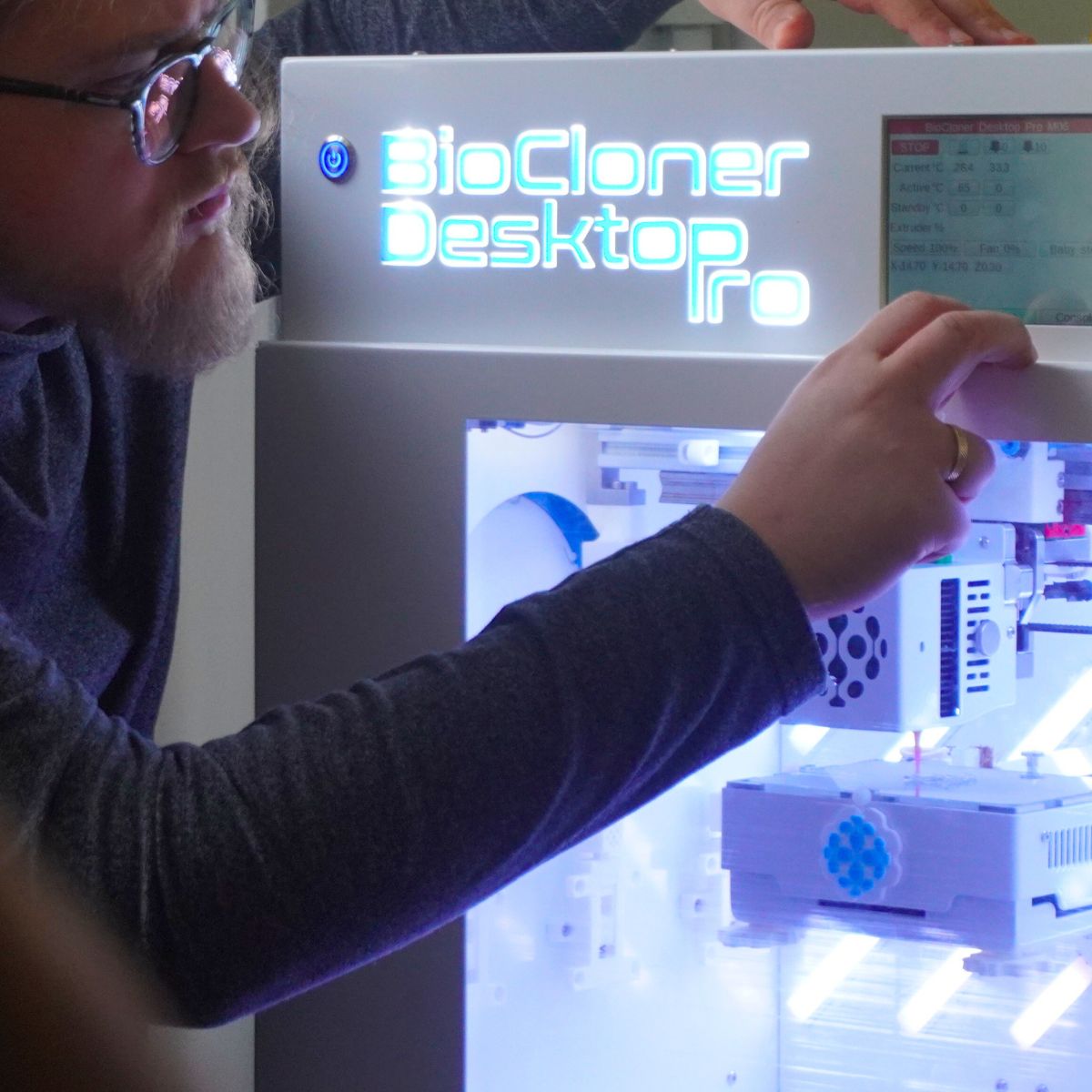
The BioCloner Desktop Pro 3D bioprinter has been implemented at the Faculty of Chemistry of the Warsaw University of Technology, where it will be used by the MicroOrganChip research team led by Prof. Elżbieta Jastrzębska. The device has been installed in the faculty’s laboratories to support ongoing research related to 3D bioprinting and the development of microfluidic technologies.
The implementation was accompanied by a meeting between the BioCloner Health team and the university’s researchers, during which the capabilities of the system were presented and a training session on its operation was conducted, including the use of the temperature-pressure printhead (CTP) for precise material dispensing.
The device will be used in research on organ-on-a-chip and lab-on-a-chip microfluidic systems, using biomaterials such as GelMA developed by BioCloner Health, collagen, and materials designed for microfluidic structures.
Other partnership examples